Cultural history
Sample essay: The lives hidden in the margins
What marginalia, doodles and side notes can tell us about the people who lived in the shadow of the main story.
Sample text for the website draft. This essay has not been written or published by Laura.
A manuscript is more than the words its author intended us to read. Around those words, other lives leave their traces: an annotation, a correction, a small drawing, a complaint. The edges of a page can become a record of its use.
Looking at these details invites a different kind of attention. Instead of asking only what a text says, we can ask what people did with it. Who read it? What caught their eye? Where did they disagree?
A history of attention
A note in the margin does not give us transparent access to a person’s mind. It does, however, offer a point of contact. Someone paused here. Someone thought this passage worth marking. An otherwise anonymous reader becomes briefly visible.
Sometimes the edge of the page is where the most interesting questions begin.
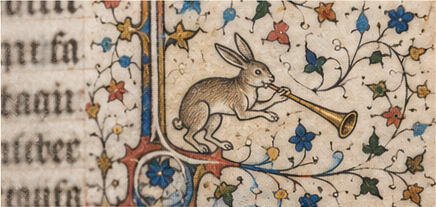
Drawings and annotations need their own context. A whimsical creature may be playful, symbolic, or simply familiar to the person who made it. We should resist turning every small detail into a complete story. The uncertainty is part of the work.
Reading beyond the main story
To read the margins is to consider a book as an object that passed through hands, rooms and generations. Its history includes its production, but also its survival and reuse. The marks left behind remind us that the past was lived by people who were not always its official narrators.
Looking closely
This sample demonstrates the publishing format, not a researched essay by Laura.1
- Read the image alongside the text.
- Ask who made the object and who used it.
- Compare the interpretation with other sources.
A useful place to begin is the British Library.
Footnotes
-
This is an illustrative footnote for testing the essay layout. Replace the sample with approved, sourced writing before launch. ↩
Continue reading
Sample essay: Who gets to write history? ↗