
Memory & identity
Sample essay: Who gets to write history?
History is not just what happened, but who remembers, who explains and who is left out.
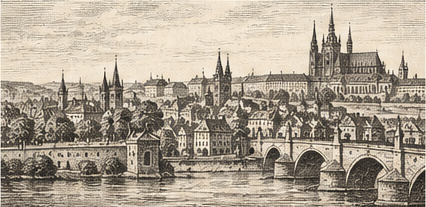
Sample text for the website draft. This essay has not been written or published by Laura.
The past leaves an uneven record. Some people had the means to preserve their words, while others appear only in documents made about them. Before we begin interpreting an archive, we are already working with the consequences of that imbalance.
The shape of an archive
A collection of surviving sources is not a miniature version of an entire society. It is the result of decisions, accidents and institutions. What was written down? What was kept? What was lost? These questions matter as much as the contents of a document.
An absence in the archive is a question, not an answer.
Recovering overlooked perspectives requires careful work. Reading a source against its intended purpose can reveal something about people whose own accounts have not survived. But the historian must distinguish evidence from inference, and acknowledge where a reconstruction remains uncertain.
A conversation that continues
History changes when we ask new questions and encounter new evidence. That does not mean every account is equally persuasive. It means an interpretation must remain open to scrutiny, supported by sources and attentive to its own limits.
Continue reading
Sample essay: Reading the past through images ↗